REVIEW · BANFF
Lake Louise: Cross Country Skiing Lesson with Tour
Book on GetYourGuide →Operated by Freeheelin' Adventures · Bookable on GetYourGuide
Lake Louise, on nordic skis, feels magical. This tour keeps it hands-on with a small group of 4 and time spent right around Lake Louise.
I love that it’s built for real skill-building, not just a scenic walk in winter boots. You get a morning focused on technique, then time in your ski boots so you leave feeling steadier than you arrived.
I also like the step-by-step basics, including the stuff that makes new skiers nervous, like how to fall and how to get back up. The instruction is led by an English-speaking guide, and one recent group highlighted Shauna for taking the time to make the fundamentals click.
One consideration: equipment is not included, and the lesson assumes you show up with waxless cross-country skis plus boots and poles, so plan rentals early.
In This Review
- Quick hits
- Meeting at Lake Louise: what “10:30 AM” really means
- Safety briefing and Nordic “start right” coaching
- Two guided skiing stretches near Lake Louise
- First guided block: learning the basics with your group
- Second guided block: turning technique into steadier skiing
- The “secret stop” break: why you need 25 minutes
- Ski around Lake Louise: what you’re really getting
- Equipment planning: waxless skis and realistic rental costs
- Rental options you can choose from
- What happens if you show up underprepared
- Price and value: is $146 worth it?
- What to pack for a smooth winter lesson
- Who this tour is best for (and who should skip it)
- The instructor impact: why patience matters in ski lessons
- Should you book this Lake Louise cross-country lesson?
- FAQ
- Where do I meet for the tour?
- What time does the experience start?
- How long is the tour?
- Is equipment included?
- What equipment do I need to bring?
- What if I need to rent skis and boots?
- Do I need to pack lunch?
- What should I wear or bring for winter weather?
- Is this tour suitable for kids or wheelchair users?
Quick hits
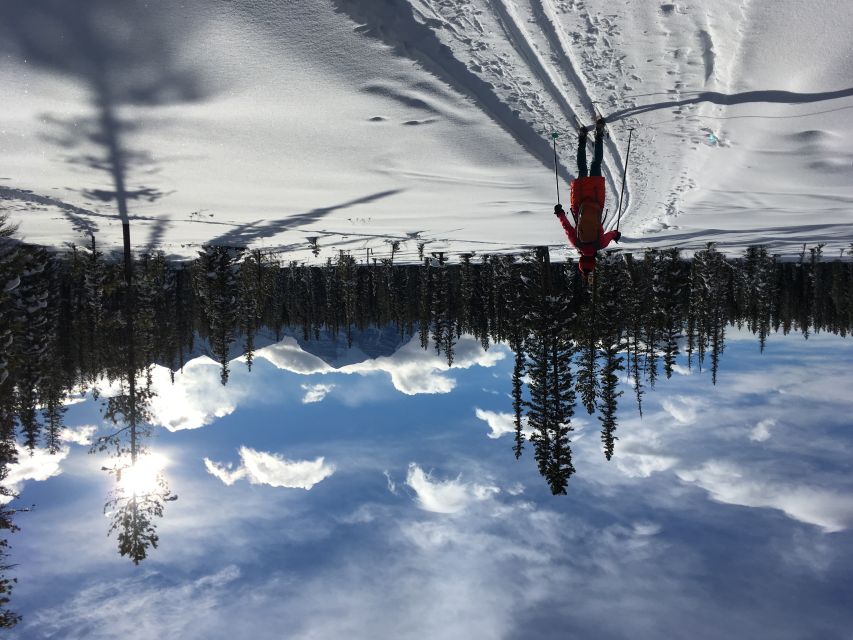
- Max 4 people means you get more personal coaching than big-group tours
- Beginner or refresher friendly: falling, gliding, and stopping are part of the plan
- Two guided blocks plus a break keeps you learning without dragging you into nonstop effort
- Waxless skis required helps simplify traction, but you’ll need to bring (or rent) the right gear
- English instruction makes it easier to understand technique fast
- You ski near Lake Louise and explore the Canadian Rockies with a short guided tour at the end
Meeting at Lake Louise: what “10:30 AM” really means
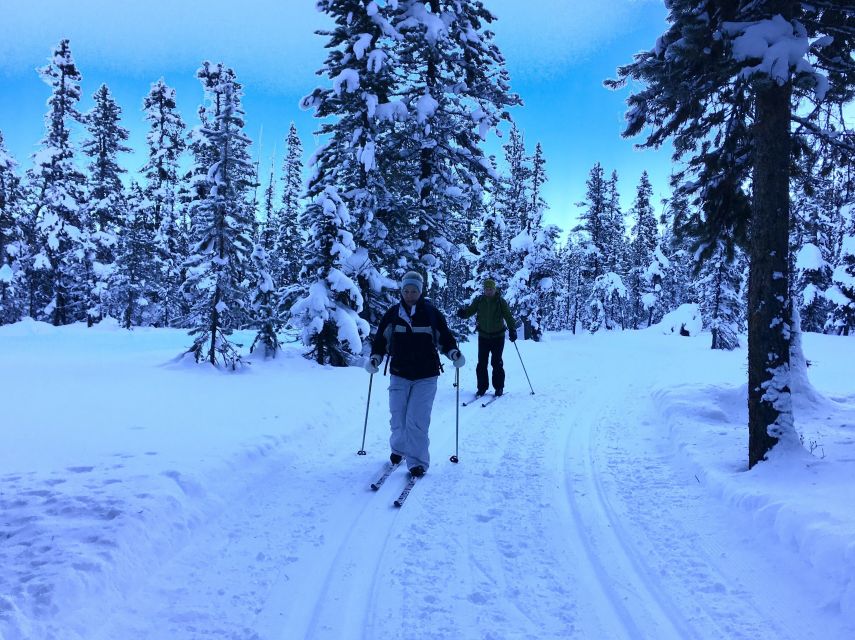
This experience starts at 10:30 AM at the public washrooms area—meet by the bench in front of the washrooms, near the Lake Louise parking. You’ll sign a waiver and a medical form first, then do an orientation before anyone clips in their skis.
Why I think this matters: Nordic skiing is technical, and cold weather doesn’t reward confusion. The early orientation helps you understand the flow of the lesson, where you’ll be skiing, and what safety expectations look like for the day.
If you’re driving in, give yourself extra time to park, walk over, and get organized. Winter mornings move fast, and it’s easier to be calm when you’re not racing your gear.
You can also read our reviews of more tours and experiences in Banff.
Safety briefing and Nordic “start right” coaching
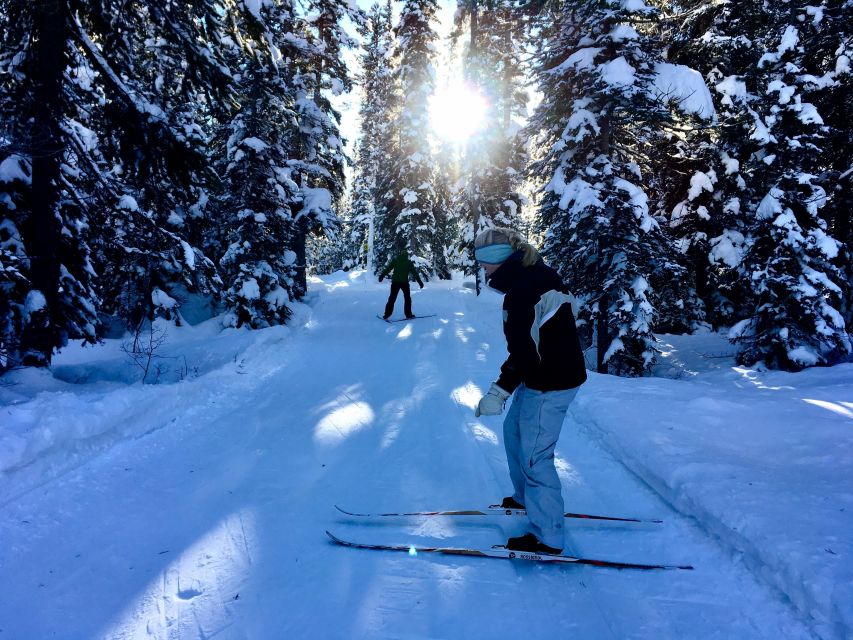
Before you head out, there’s a 15-minute safety briefing. That isn’t just formalities. It sets the rules of movement in a group, how to manage your skis, and what to expect from your guide once you’re on snow.
From there, the guiding focus shifts into real skill work. Depending on whether you’re a beginner or doing a refresher, you’ll learn the basics you need for cross-country skiing: how to balance, how to glide, and how to stop confidently. The best part is that stopping isn’t treated like a bonus skill. It’s part of the foundation.
And yes, they cover falling down and getting back up. That sounds intimidating, but it’s the fastest route to confidence. When you know what to do, the fear drops.
Two guided skiing stretches near Lake Louise
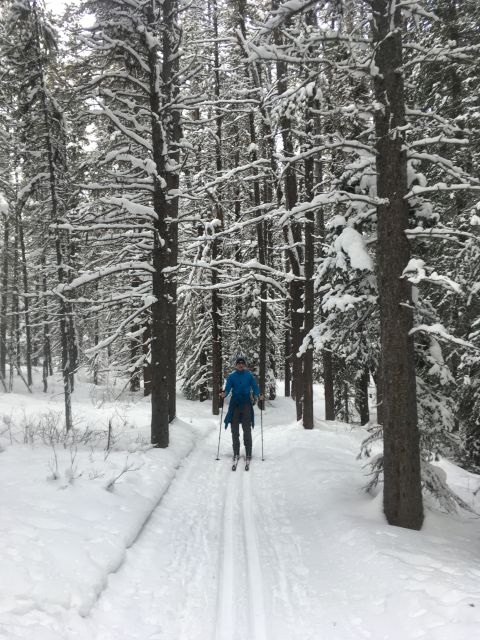
Your day includes guided skiing in two main blocks, with a break in the middle. That structure is useful because it lets you build one set of skills, then reset before you apply them for longer stretches.
First guided block: learning the basics with your group
The morning guided portion is where you’ll focus on fundamentals near iconic Lake Louise. Even if you’re new, you shouldn’t feel like you’re just being led along at a pace that’s way above your ability. The instruction is meant to match your level—beginner coaching if you’re starting out, or a refresher if you’ve skied before but want the technique tightened up.
For many people, the hardest part is getting your skis to feel predictable. This is where gliding practice helps. You learn how your body position affects speed and control, and you figure out how to coordinate poles and legs without thinking about it every second.
Second guided block: turning technique into steadier skiing
After the break, the second guided portion helps you apply what you learned. This is where you should start feeling more in sync with your gear and the terrain.
The goal isn’t perfection. The goal is being able to move forward with less wobble, more control, and fewer panic moments. The tour is designed so that by the afternoon, you’re more confident in your ski boots—because confidence in boots is basically confidence in everything else.
The “secret stop” break: why you need 25 minutes
Between the two guided sections, you’ll have a 25-minute break at a secret stop. Details beyond that aren’t provided, but the purpose is clear: regroup, warm up a bit, and reset before you ski again.
This is also where you’ll benefit from a practical move: check your gloves, adjust your layers, and do a quick mental gear scan. If something feels off—skis too tight, poles too short, boots rubbing—this break is your window to fix it before the next stretch.
Winter skiing is physical, even when you’re moving slowly. A real break helps you keep your energy for the second half instead of running on stubborn willpower.
Ski around Lake Louise: what you’re really getting
Sure, you’re skiing near one of Canada’s most famous views. But the real value is that you’re skiing in a guided setup where you learn how to move efficiently on snow that can be slippery, uneven, and unforgiving if you’re off-balance.
This tour also includes exploring the Canadian Rockies, not just passing by the obvious postcard spot. That’s important because skiing outdoors is about flow—how you move from one moment to the next with control.
One more detail that’s easy to overlook: you’re not just learning technique. You also get a short guided tour at the end of the lesson. That adds context and helps connect what you practiced to what you’re seeing around you.
Equipment planning: waxless skis and realistic rental costs
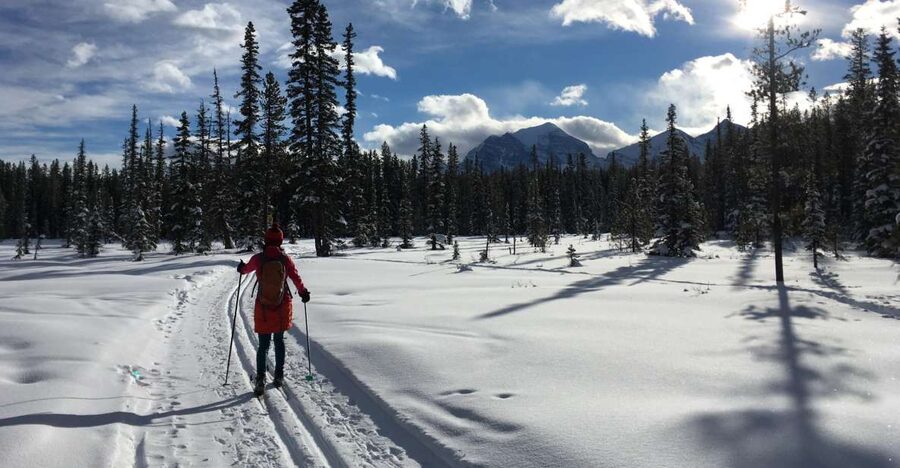
Here’s the part that can make or break your day: cross-country ski equipment is not included.
You’re asked to bring waxless cross-country skis, boots, and ski poles. Waxless skis matter because they remove a big step of the snow-prep process. Instead of worrying about wax timing and traction questions, you focus on learning technique.
Rental options you can choose from
If you don’t own the right gear, the info provided includes these rental options:
- Chateau Lake Louise equipment rentals: $60/person
- Gear Up in Canmore: $30/person
- Wilson Mountain Sports in Lake Louise: $29/person
How to think about this for value: the lesson itself is $146 per person, so renting the wrong gear or paying at the wrong place can quietly erase part of what you paid for instruction. If you’re already budgeting, it’s worth lining up rentals in advance so you’re not improvising last-minute in a busy winter town.
What happens if you show up underprepared
If your skis or boots don’t match what the lesson expects, your technique work suffers. You’ll spend time adjusting instead of learning. And in cold weather, that drains your motivation fast.
So take the waxless requirement seriously, and pack for comfort rather than looks.
Price and value: is $146 worth it?
At $146 per person for a 5-hour experience, this isn’t the cheapest way to ski Lake Louise. But it’s also not trying to be.
You’re paying for:
- a local guide giving cross-country ski instructions
- beginner or refresher coaching
- a structured plan (safety briefing, guided skiing, break, second guided block)
- time spent actually learning control skills—falling, gliding, and stopping—not just sightseeing
The small group limit of 4 participants changes the value equation. In a setting like this, you can’t get a personal technique check from a crowd. Here, you’re more likely to get corrections and encouragement when you need them.
If your goal is to learn fast and avoid a frustrating first day on nordic skis, the price starts to make sense.
What to pack for a smooth winter lesson
You’ll be outside for the full 5 hours, and the activity operates over lunch, so bring what you need to stay warm and functional.
Minimum practical packing list from the info:
- Warm clothing and outdoor layers
- A hat
- Gloves (and consider mittens for extra warmth)
- A neck warmer (winter weather prep)
- A packed lunch
- Outdoor winter sports gear
- Hand sanitizer or tissues
- Medical mask
Also plan for waterproof layers if you have them. Snow days can mean wet gear, and wet gear turns into cold gear quickly.
Quick tip: dress like you expect to work a bit, but not like you’re trekking all day. Nordic skiing can warm you up, but the wind around the lake area can cool you down between efforts.
Who this tour is best for (and who should skip it)
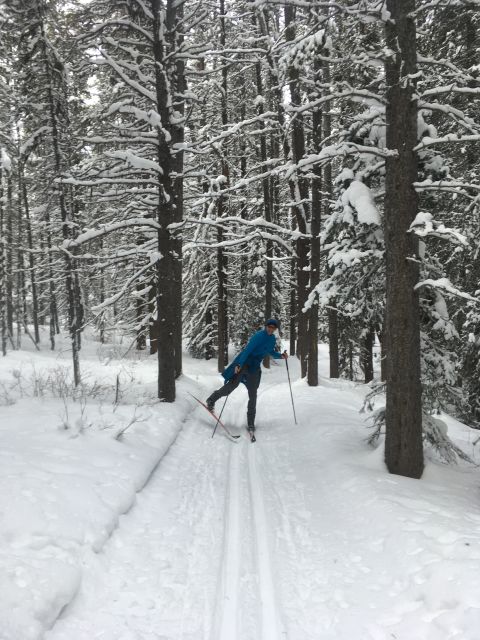
This is a good fit if you:
- want to learn cross-country skiing near Lake Louise with real coaching
- are a beginner or want a refresher that matches your level
- prefer a small group where the guide can focus on technique
It may not be a good fit if you:
- are looking for a casual stroll only
- need accessibility accommodations, because it’s listed as not suitable for people with mobility impairments and wheelchair users
- are traveling with children under 14
If you’re fit enough for a winter activity and you can handle time outdoors, this tour is likely a strong match—especially if you’d rather learn the right moves early than struggle alone.
The instructor impact: why patience matters in ski lessons
One of the standouts from the provided feedback is how personal the tuition feels. Shauna was mentioned specifically for taking time to make sure beginners understood the basics, and that patient attention is exactly what you want when learning control skills.
That kind of coaching reduces the time you spend guessing. On skis, guessing wastes energy and can turn small mistakes into big slips. Good instruction makes your body learn faster, and your confidence grows sooner.
Should you book this Lake Louise cross-country lesson?
I’d book it if you want a structured way to ski Lake Louise without turning your day into a trial-and-error experiment. The small group size, the emphasis on fundamentals (including how to stop and recover), and the guided time split across the morning and afternoon are all built for learning.
I’d pause and rethink if you don’t already have (or can easily rent) waxless skis, boots, and poles. Equipment planning is part of this experience, and showing up unready can turn the lesson into a gear problem instead of a skills day.
If you’re the type who learns best with hands-on coaching, this tour is a solid way to spend a winter morning in the Canadian Rockies—while building the confidence that lets you keep skiing after the lesson ends.
FAQ
Where do I meet for the tour?
Meet at the Lake Louise parking area in front of the public washrooms, by the bench.
What time does the experience start?
The experience meeting and orientation begin at 10:30 AM.
How long is the tour?
It lasts 5 hours.
Is equipment included?
No. Cross-country ski equipment is not included.
What equipment do I need to bring?
You should bring waxless cross-country skis, boots, and ski poles.
What if I need to rent skis and boots?
Rentals are available with the listed options: Chateau Lake Louise at $60/person, Gear Up in Canmore at $30/person, and Wilson Mountain Sports in Lake Louise at $29/person.
Do I need to pack lunch?
Yes. The activity operates over lunch, so you’ll want to bring a packed lunch.
What should I wear or bring for winter weather?
Bring warm outdoor clothing, gloves, a hat, a neck warmer, and winter sports gear. The info also asks for a medical mask and hand sanitizer or tissues.
Is this tour suitable for kids or wheelchair users?
No. It’s not suitable for children under 14, and it’s listed as not suitable for people with mobility impairments or wheelchair users.