REVIEW · INTERLAKEN
From Interlaken: 8-Hour Skiing in Grindelwald for Beginner’s
Book on GetYourGuide →Operated by Outdoor Switzerland AG · Bookable on GetYourGuide
You’ll ski under the Eiger’s shadow. I love how this 8-hour beginner lesson in Grindelwald gives you real time on snow, not just standing around. And the Eiger North Face views make every first turn feel bigger than a typical ski class.
One thing to plan for: this is active all day, and food and drinks aren’t included, so pack lunch (or bring money) or you’ll feel it halfway up the mountain.
In This Review
- Quick hits: what makes this beginner ski day work
- Grindelwald beginner skiing: why this day feels like more than a lesson
- Meeting at Outdoor Interlaken Base and getting geared up
- The instructor factor: calm coaching beats guessing
- Bodmi beginner slopes: learning the right skills in the right order
- Magic carpets and drag lifts: the underrated part of beginner success
- The Eiger North Face moment: learning while the view hits you
- The full-day rhythm: what an 8-hour beginner day feels like
- What’s included, what’s not, and how to avoid the common gotchas
- What to pack for Grindelwald beginner skiing
- Who this is best for (and who should skip it)
- Value for $256: where your money actually goes
- Weather and momentum: how to stay flexible
- Final call: should you book this beginner ski day from Interlaken?
Quick hits: what makes this beginner ski day work
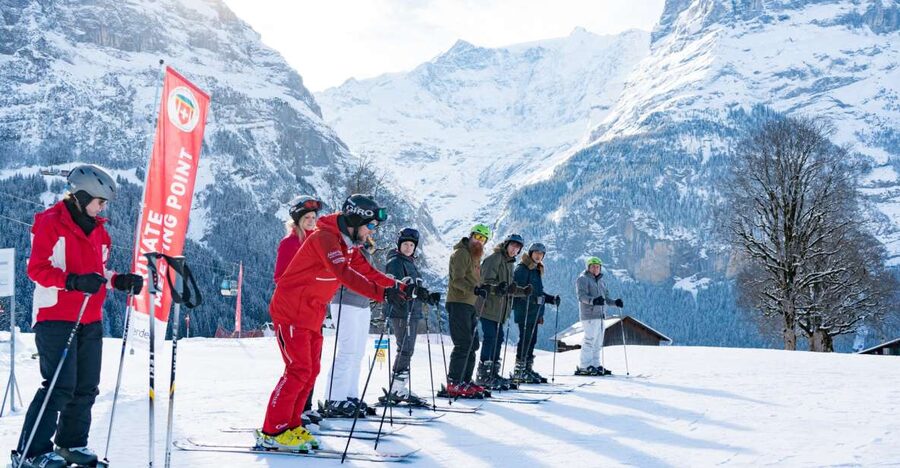
- Small groups (max 8) mean you get attention while you learn
- Bodmi beginner slopes are ideal for building confidence fast
- Drag lifts and magic carpets help you rest without losing momentum
- English or German instruction keeps things clear from the start
- All the key basics (starting, stopping, turning) are taught so you can reuse them later
Grindelwald beginner skiing: why this day feels like more than a lesson
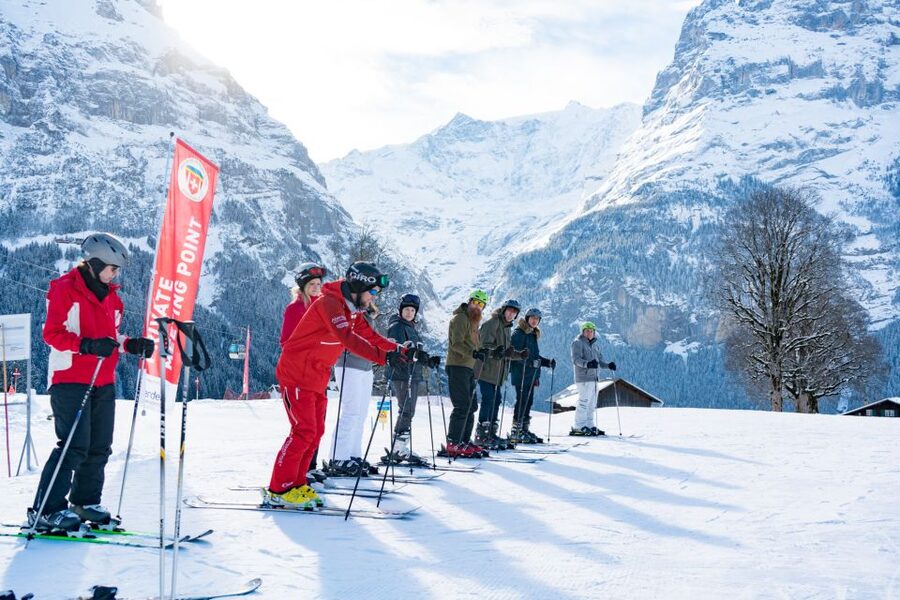
If you’re brand-new to skiing, you don’t need theory first. You need reps. That’s what I like about this Grindelwald option: you’re out there for a full 8 hours, with an instructor guiding you through the fundamentals while you rack up runs on beginner terrain.
And yes, it’s still Switzerland. The views of the Eiger North Face are a big deal here, and they’re right there while you practice. That matters more than it sounds. When you feel safe and supported, the environment stops being noise and becomes part of the fun, so you stay relaxed enough to learn.
The day is built for comfort, too. You use beginner lifts like drag lifts and magic carpets so you can keep practicing without burning out every minute. Even if you start cautious, you’re not stuck in the hardest parts of learning. You’re learning in the right place.
Meeting at Outdoor Interlaken Base and getting geared up
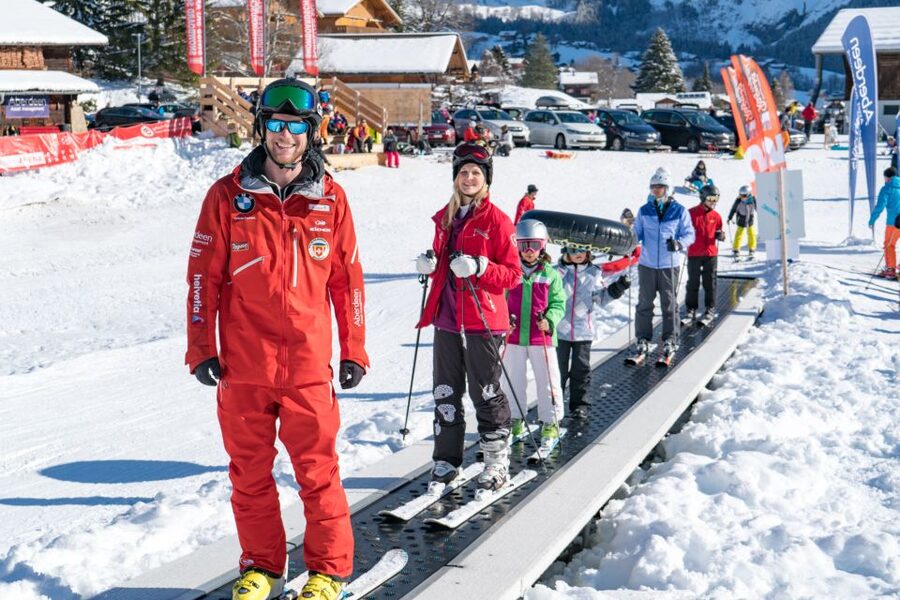
Your day starts at the Outdoor Interlaken Base. You meet your instructor and your small group there, then you get a quick safety induction and collect your equipment before heading to the slopes.
This part is more important than it looks. When you’re new, confusion costs energy. Having the gear sorted and the safety basics explained up front helps you get moving sooner, and it reduces that uncomfortable feeling of not knowing what’s happening next.
Equipment-wise, the lesson includes ski, boots, and helmet rental. If you need warmer layers or ski pants and a jacket, you can rent those on site, but warm winter clothing is required. Think of it this way: the instructor gives you technique; you provide the comfort so your legs and fingers can actually cooperate.
The instructor factor: calm coaching beats guessing
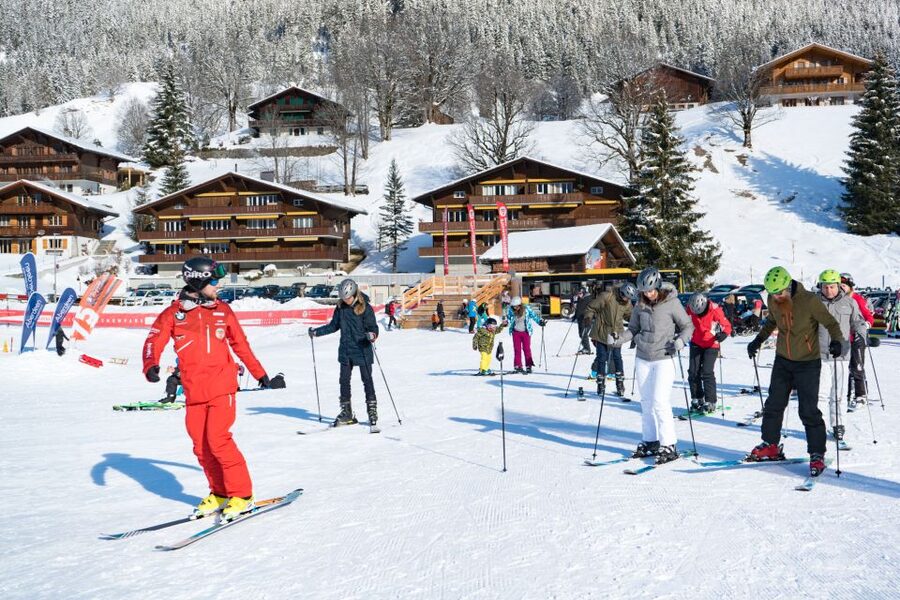
The biggest reason this works for beginners is the coaching style. In the reviews, instructors are called out for being calm, patient, and step-by-step. Names that come up repeatedly include Lucas, David, Allan, West (and an Allen), and Charlotte—with comments focused on how they adjust to learners and teach in a way that makes sense.
Here’s what that usually means in practice:
- You get direct cues for what to do with your body
- You learn how to control speed (not just how to survive)
- You practice stopping and turning until it feels routine
I also like that the group is capped at 8 participants. That size makes it realistic for the instructor to notice what’s happening with your stance and weight transfer, rather than shouting corrections into the void.
Language support is English and German, which helps if you don’t want to guess at ski instructions in a rush.
Bodmi beginner slopes: learning the right skills in the right order
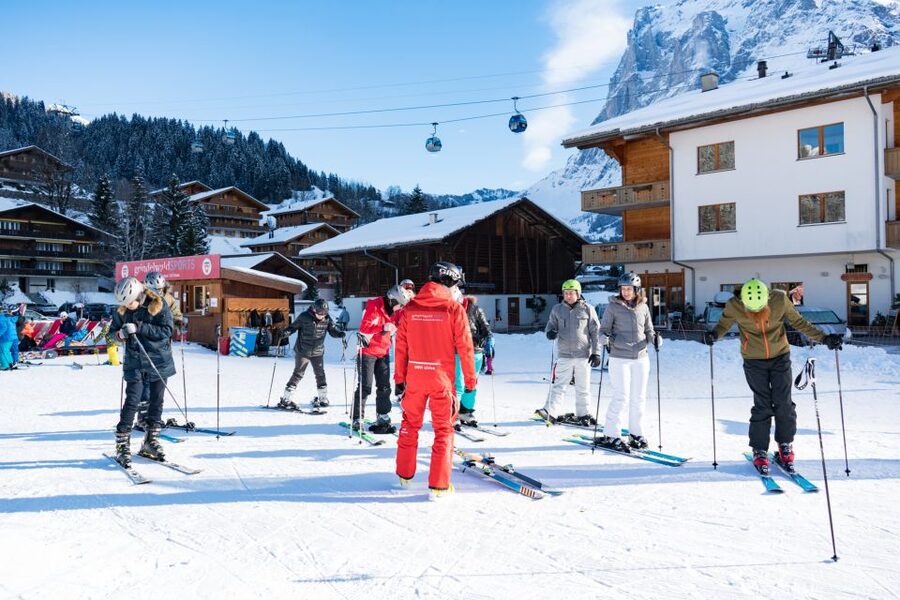
The core of your day is on the Bodmi beginner slopes. That’s where you build confidence without needing advanced terrain.
Expect to start with the fundamentals that actually matter on snow:
- How to get moving and stay balanced
- How to slow down and stop safely
- How to turn without panicking
- How to ski with control rather than speed
Beginner skiing lessons often fail when they throw you into too much too soon. Here, you’re practicing where your mistakes don’t feel catastrophic. That’s how you progress. The Bodmi area is built for it, and your instructor’s job is to guide you through steps you can repeat.
From the reviews, the progression is real. People describe finishing the day feeling confident enough to ski on their own afterward, which is a sign the lesson doesn’t just cover moves—it gives you fundamentals you can reuse.
Magic carpets and drag lifts: the underrated part of beginner success
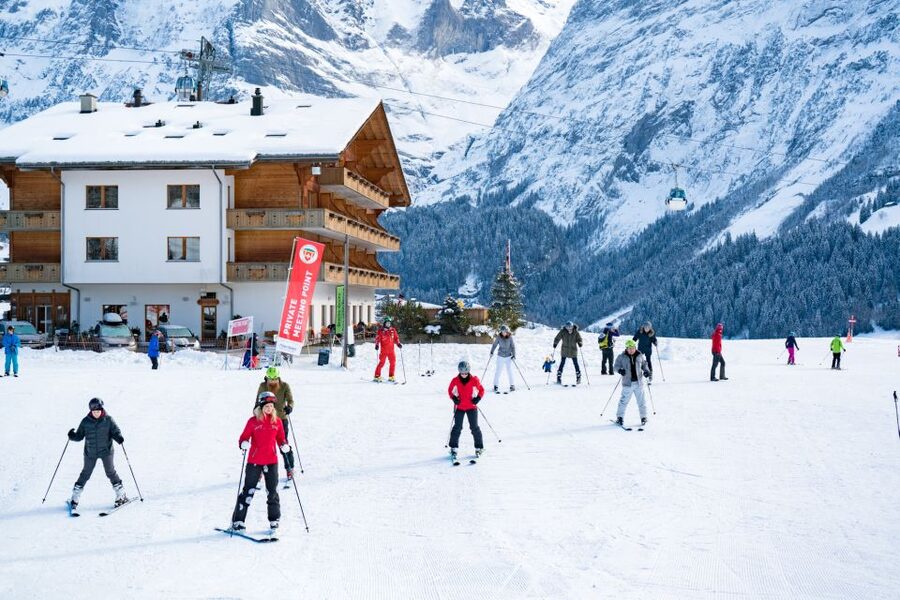
One of the included perks is the lift ticket for the magic carpet at Bodmi Arena. You also use drag lifts and magic carpets during the lesson, and that’s not just for convenience.
When you’re learning, your energy drops fast. Drag lifts can be awkward at first, and without relief you end up doing fewer practice runs. Magic carpets help you:
- Get back to the top faster
- Keep your mind focused on technique
- Practice more turns and stops with less exhaustion
You’ll still work hard—skiing uses muscles you might not expect—but these lifts make the day sustainable for first-timers.
The Eiger North Face moment: learning while the view hits you
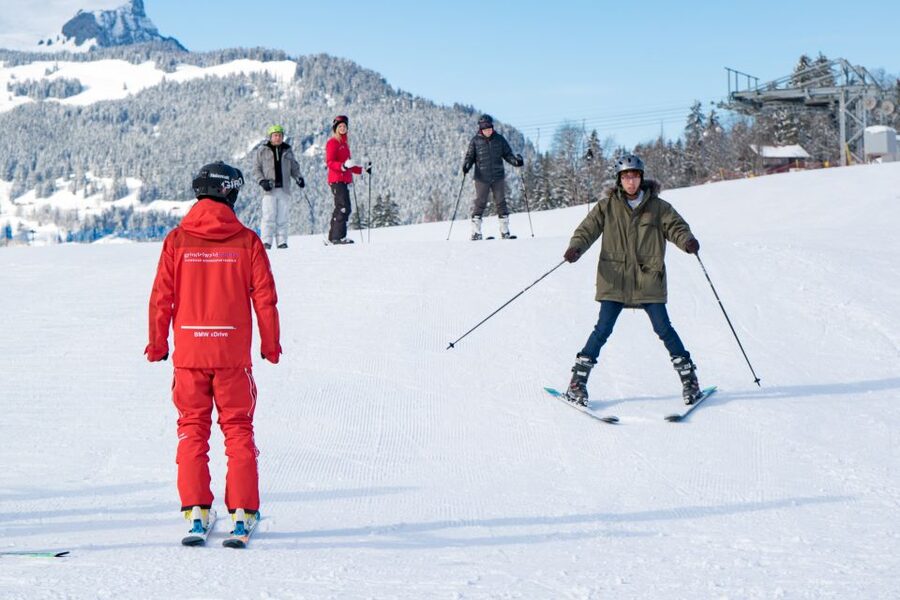
One highlight is the panoramic views of the glaciers and the Eiger North Face. This is one of the most famous mountain faces in the world, and you see it while you’re out there learning.
Why do I think this matters for beginners? Because fear and overwhelm shrink when you feel grounded. Taking a second to look up—while still being in control—reminds your brain that you’re in a safe learning environment.
It also keeps the day from feeling like a grind. When you’re tired, a good view helps you focus on what you’re doing now instead of what you might do wrong later.
The full-day rhythm: what an 8-hour beginner day feels like
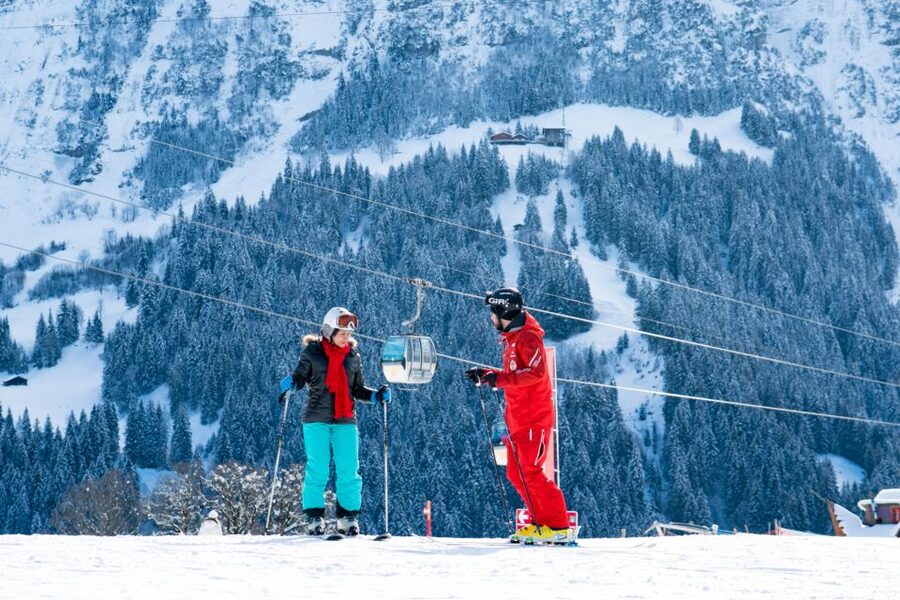
This is an all-day format, not a quick taste. The upside is more time to practice, more chances to fix mistakes, and enough pacing that you don’t rush through every skill.
A realistic beginner day includes:
- Short instruction blocks
- Frequent practice runs
- Breaks that keep you safe and prevent burnout
- Lift rides that reset your legs
You should also plan for a workout. Multiple reviews mention sore legs afterward, which is exactly what you’d want from a “learn to ski” experience. If you feel nothing, you probably didn’t learn much—or you weren’t really getting down to practice.
What’s included, what’s not, and how to avoid the common gotchas
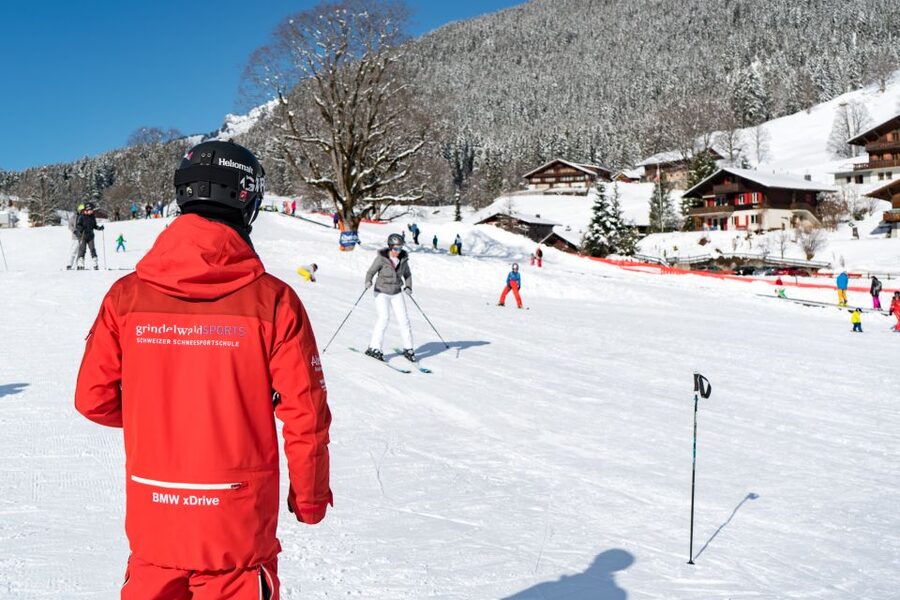
Included
- Instructor coaching
- Ski, boots, and helmet rental
- Lift ticket for the magic carpet at Bodmi Arena
Not included
- Warm winter clothing (available to rent on site)
- Food and drinks
So here’s the practical move: bring or rent warm layers that you can move in. Gloves matter. Hat matters. If your hands get cold, you’ll stop trusting yourself, and that slows learning.
For food, bring a packed lunch. The restaurant up the mountain isn’t treated like a must-try. Plan on simple fuel so you can keep practicing instead of dragging yourself through hunger.
What to pack for Grindelwald beginner skiing
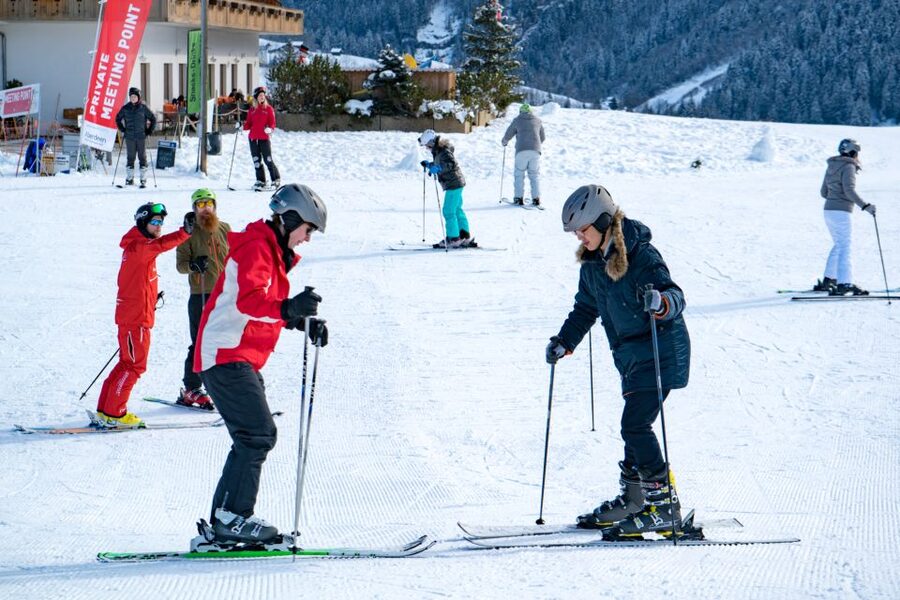
Based on what you’re advised to bring, I’d pack like this:
- Warm winter clothing (layers you can ski in)
- Gloves
- Hat
- Helmet (though helmet rental is included; if you prefer your own, you can bring it)
- Comfortable clothes underneath
- Snow clothing as needed for warmth and mobility
If you’re renting winter clothing on site, that can cover what you forgot, but don’t count on it for last-minute miracle warmth. Arrive ready so you’re not negotiating comfort while learning technique.
Who this is best for (and who should skip it)
This is a beginner-focused ski experience, so it fits if you’ve never skied before or you want structured fundamentals.
It’s also a good fit if you value:
- Small-group attention
- Calm, step-by-step instruction
- Enough time to build confidence
It’s not suitable for:
- Children under 12
- Pregnant women
- People with back problems
- People with heart problems
- Wheelchair users
- Unaccompanied minors
There’s also a minimum age rule: minimum 12 years, and if someone is under 16, they must be accompanied by an adult taking part in the same lesson.
Value for $256: where your money actually goes
At $256 per person for 8 hours, the value comes from three things that beginners usually struggle to manage alone:
- Instruction that prevents bad habits
- Rental gear (ski, boots, helmet)
- Lift support for beginner practice (magic carpet included)
If you tried to piece this together on your own, you’d likely pay for rentals anyway, and you’d still be paying for a guide’s time if you wanted any kind of fast progress. Here, the instructor time is built into the price, and the day length gives it room to work.
Is it perfect value if you hate exertion? Maybe not. But if you want to go from zero to confident basics in one day, this is one of those prices that feels fair once you’re actually doing the practice.
Weather and momentum: how to stay flexible
Skiing depends on conditions. Weather can affect the activity, and you may get updates about changes or cancellations on the day.
So I’d treat this as a plan you can adapt. If you’re visiting Switzerland and you can rearrange your schedule slightly, this kind of class is easier to work around.
Final call: should you book this beginner ski day from Interlaken?
I’d book it if:
- You’re a true beginner and want structured coaching
- You want real practice time, not a short intro
- You like the idea of Bodmi beginner slopes plus Eiger North Face views
- You’re comfortable bringing (or renting) warm winter gear and packing lunch
I’d think twice if:
- You fall into the listed health or accessibility categories (back/heart issues, wheelchair users, pregnancy)
- You don’t want an all-day workout
- You hate planning for cold weather and food
If you want one day that genuinely teaches you how to control speed, turn, and stop, while keeping the environment safe and the guidance patient, this is a strong beginner choice.