REVIEW · BISHKEK
5 days sightseeing and skiing trip in Kyrgyzstan
Book on Viator →Operated by Kyrgyz Nature Travel Company · Bookable on Viator
Ski days and Silk Road ruins in one loop. I like the included ski gear and private, air-conditioned transport that keep the plan moving without headaches. One watch-out: the trip notes that mountain nights can get cold and weather can change fast, so pack serious layers.
This is a compact route. You start in Bishkek, then work your way through classic stops tied to Kyrgyzstan’s Silk Road past, before shifting into Karakol and the gorge-and-snow country near Issyk-Kul. It’s also a true private setup, with pickup offered and a mobile ticket for smoother check-in.
Most people can join, but this is still real winter travel. If your goal is skiing and mountain viewpoints, you’ll want to follow the instructor’s lead and be comfortable walking on uneven snow and rock.
In This Review
- Key highlights you’ll actually feel
- The efficient rhythm: Bishkek bases, mountain days, and no wasted time
- Burana Tower and the Balasagyn story: Silk Road archaeology without the museum fatigue
- Chon-Kemin National Park: where the altitude range does half the work
- Karakol: the mountain town that earns its break from skiing and driving
- Dungan Mosque in Karakol: a quick cultural contrast stop
- Ski day near the Karakol slopes: gear, passes, and instructor-led time
- Djeti-Oguz, Broken Heart gorges, and Jeti-Oguz Seven Bulls rocks
- Barskoon valley with waterfalls: the gorge day that feels like a payoff
- Canyon Skazka: a last-day mountain valley that works even when weather shifts
- Meals, water, and the real cost of comfort
- Price and logistics: what $600 buys you here
- What to pack (and what will save you in cold Kyrgyz weather)
- Should you book this Kyrgyz ski-and-sightseeing trip?
- FAQ
- What’s the duration and price for this Bishkek-based trip?
- Does the trip include skiing equipment?
- How many meals are included?
- Is transportation included, and is pickup available?
- What sightseeing stops are part of the route?
- Can I cancel for a full refund?
Key highlights you’ll actually feel
- Ski equipment included so you can travel lighter and spend money on the right things instead of gear rental
- Altitude-focused ski time with a ski pass up to about 3,040m for major mountain views
- Silk Road stops that make sense: Burana Tower plus the ancient city story around Balasagyn
- Karakol culture in small doses: Dungan Mosque stop for a quick, memorable contrast
- Gorges and rock formations close together so your days feel full but not chaotic
- Meals and fees handled: 4 breakfasts, 3 dinners, and all fees and taxes are included
The efficient rhythm: Bishkek bases, mountain days, and no wasted time
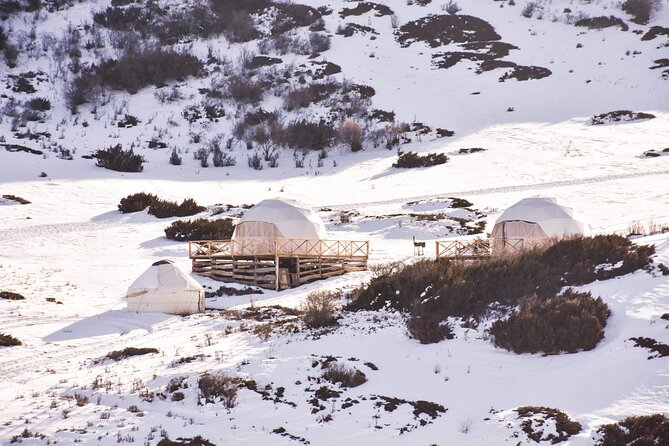
A lot of Kyrgyzstan trips feel like a series of long drives with one quick photo stop. This one tries to be smarter. You get a proper sequence: cultural warm-up, then nature days, then ski time, then more scenery before the finish.
You’re not left guessing what’s next. The package includes private transportation and is built around day blocks that match what Kyrgyzstan does best—big distances, dramatic changes in altitude, and scenery that keeps shifting every few hours.
There’s also a practical comfort angle. The vehicle is air-conditioned, and pickup is offered. That matters when you’re going from city roads to mountain routes and back again.
Burana Tower and the Balasagyn story: Silk Road archaeology without the museum fatigue
Burana Tower is one of those sites where one hour can feel like it tells a whole chapter. It’s about 80 km from Bishkek, and the stop includes admission and time to explore the Burana historical complex and its museum.
The tower itself is a clear landmark, but what makes it worthwhile is how it connects to the broader Silk Road world you’ll hear about in Kyrgyzstan—especially the ancient city reference to Balasagyn. You get context without needing a full-day lecture. It’s the kind of stop that helps you understand why this region mattered so much long before modern tourism existed.
If you’re traveling in winter or shoulder season, wear layers even for this “easy” stop. The tower area can be windy, and the ground can be uneven. Bring shoes you trust.
Chon-Kemin National Park: where the altitude range does half the work
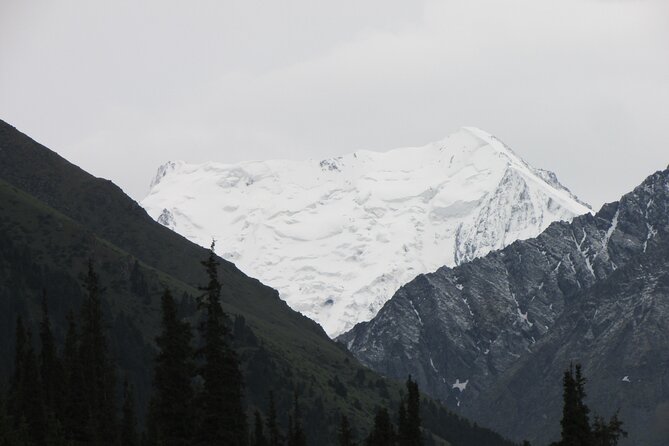
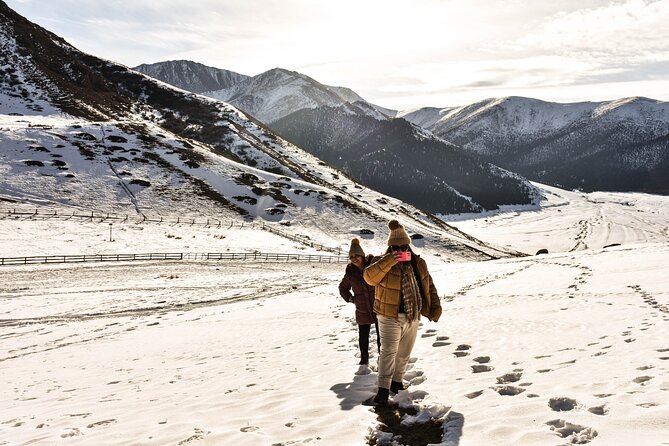
After Burana, the route heads toward Chon-Kemin National Park, roughly 150 km east of Bishkek. This park is big on scale: about 500 ha and a wide altitude range from roughly 1,400m up to 2,800m.
That altitude shift is why this stop feels different from city life fast. You get cooler air higher up and a stronger sense of being in the mountains even if your day is mostly scenic driving plus some exploring time. Admission is listed as included, so you can focus on actually being outside instead of planning ticket steps.
Practical tip: this is a good day to use your hiking shoes. Even when you’re not doing a strenuous hike, cold-weather footing can be tricky. Keep your rain layer handy too. Weather in this region changes quickly.
Karakol: the mountain town that earns its break from skiing and driving
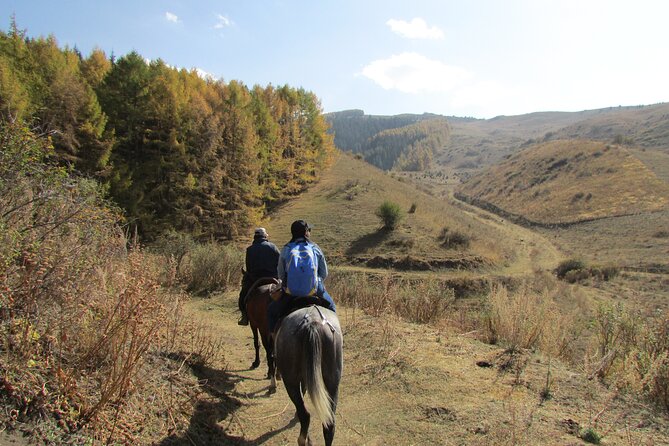
Karakol is where the trip pivots from Silk Road and valleys into mountain-town energy. It sits on the eastern side of Kyrgyzstan, across from Issyk-Kul’s region, and it’s known for gorges—especially the area around Altyn-Arashan hot springs.
Even if you don’t spend the whole day on hot springs, Karakol is a smart base because the scenery around it is built for short trips: quick scenic drives, rock formations nearby, and skiing access that doesn’t require a multi-day transfer.
This area also ties into the “big picture” of the country. Issyk-Kul is famous for a reason: it’s about 180 km long and roughly 600m deep, and it’s described as Asia’s biggest salty lake. You may not see the full lake from every stop, but the region’s identity is part of the drive and the climate.
Dungan Mosque in Karakol: a quick cultural contrast stop
One of the best parts of a sightseeing day is when it shifts tone. In Karakol, that shift happens at the Dungan Mosque. The stop focuses on the story of the Dungans—Chinese Muslims who arrived in the 1800s after political unrest—and how their community helped shape Karakol.
The visit is short—about 30 minutes—and admission is included. That makes it a good add-on even if you’re juggling winter timing and energy levels. You get culture without losing the whole day to indoor time.
If you’re sensitive to cold when you sit still, dress for it. Short doesn’t mean warm.
Ski day near the Karakol slopes: gear, passes, and instructor-led time
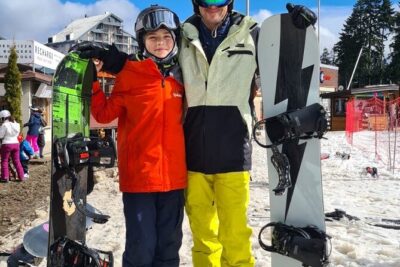
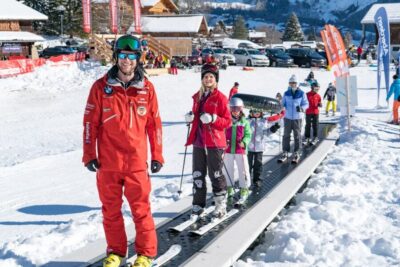
Your ski day is built around access to higher slopes and views. The plan takes you up toward the Karakol ski resort and valley. Then you use a ski pass to reach roughly 3,040m for mountain views, followed by skiing time with an instructor.
Ski equipment is included, which is a big value piece. It reduces your packing stress and avoids rental surprises. Also, having an instructor helps you get more out of limited time on the snow.
I like how the schedule aims to combine height + instruction + time on skis. Too many trips treat skiing like a drop-off and go. Here, the structure suggests you’ll get real time sliding instead of only watching.
If you’re chasing snow, this country can deliver. In past trip stories, guests set snow expectations high and were happy with frequent snowfall days. Still, don’t treat it like a guarantee. Winter conditions can vary.
Quick packing reminder for skiing: warm gloves, a layer system you can adjust, and goggles or sunglasses for bright snow glare. The trip explicitly reminds you that sun is part of the mountain experience.
Djeti-Oguz, Broken Heart gorges, and Jeti-Oguz Seven Bulls rocks
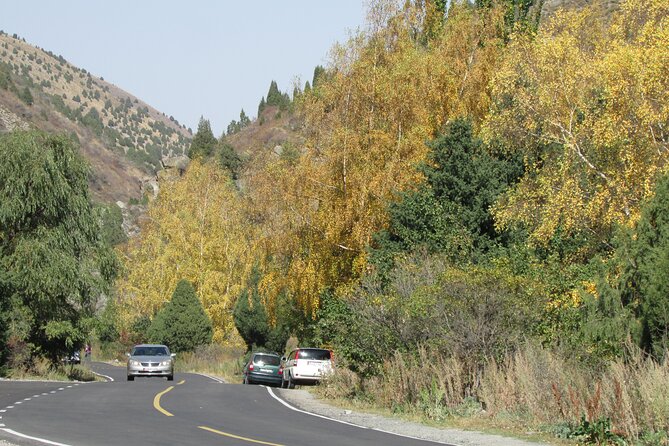
Day after skiing can go two ways: either you rest, or you turn fatigue into a scenic win. This route chooses scenic.
First, you drive from Karakol toward Djeti-Oguz Gorge and the Broken heart gorges, about an hour from the city. Then the plan moves to Jeti-Oguz Canyon, also known for the Seven Bulls rocks—sandstone formations roughly 25 km southwest of Karakol, named for the bulls-like shape.
You get a full block to explore—about 3 hours at Jeti-Oguz—with admission included for that stop. It’s a strong choice because it matches winter travel reality: you don’t need a long hike to feel like you’re in a geologic wonderland.
Now, a practical note: rock formations in cold weather can mean uneven ground and slick patches. Take your time, watch your footing, and keep one jacket ready even if you’ll be walking between short car transfers.
Barskoon valley with waterfalls: the gorge day that feels like a payoff
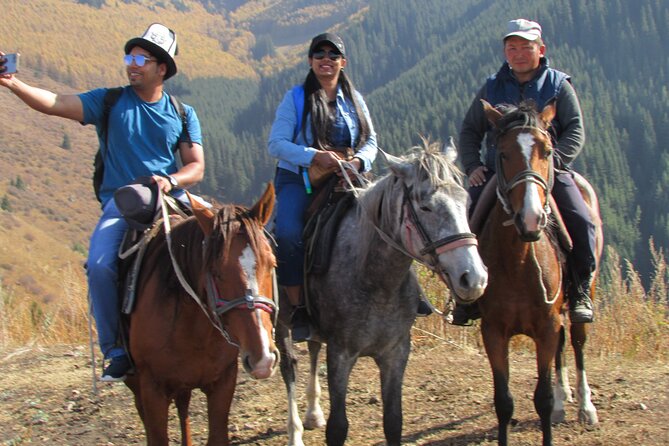
After the rock formations, the route adds Barskoon. The plan includes time at Barskoon Gorge and describes the area as part of the Barskoon valley with waterfalls.
That’s the kind of change that stops your trip from feeling repetitive. One day you’re looking at sandstone shapes and canyons. Another day you’re focusing on water movement and the way gorges funnel wind and cold air.
A short drive from Karakol to the canyon areas is part of the experience here—less “endless road time,” more “see, stop, walk a bit, then go again.”
If you’re traveling with limited energy after skiing, this is still manageable because the day is broken up by car time. Just keep your layers on. In mountain valleys, wind can flip comfort fast.
Canyon Skazka: a last-day mountain valley that works even when weather shifts
Your final day heads to Canyon Skazka near the Tosor village and the Terskey Ala-Too mountains. The route describes turning after Tosor and passing about 4 km to reach the canyon area.
This is a longer stop—around 6 hours—with admission included. That duration matters because Skazka tends to be the kind of place where you want time to wander rather than only snap photos and leave.
I also like that it’s placed at the end. After skiing and gorge days, you’ve built context. You understand how this region layers history, geography, and changing weather into one trip.
Still, keep your flexibility. Mountain areas can change with cloud cover and temperature. If it’s snowing or windy, slow down and plan for shorter, safer walking.
Meals, water, and the real cost of comfort
Food is handled in a straightforward way: you get 4 breakfasts and 3 dinners included. That’s a genuine value point because it removes several daily choices—especially helpful in winter when hours and menus can be unpredictable.
The plan also says mineral water and alcohol drinks aren’t included. That’s common for tours, but it’s worth budgeting. In cold weather, you still get dehydrated, and hot drinks can be a lifesaver.
One small detail that shows how the operator thinks about comfort: past guests highlighted good food and friendly service in a way that went beyond just being punctual. It’s not a luxury cruise, but it’s built around making the days feel smoother.
Price and logistics: what $600 buys you here
At $600 per person for about 5 days, this package can look “normal” until you list what’s actually included. You’re covering skiing equipment, all fees and taxes, private transport in an air-conditioned vehicle, and meals (4 breakfasts, 3 dinners).
That’s the real math. If you add up gear rental, tickets, and transport separately, your total usually creeps upward fast in remote mountain regions. Here, those costs are folded into the price, which helps you plan without constantly pulling out your wallet.
You also get a few operational conveniences: pickup offered, group discounts, and a mobile ticket. Group discounts are useful if you’re traveling with friends or want to reduce per-person costs.
The main trade-off is that you’re following a schedule with multiple moving parts. If you like ultra-slow travel or long solo detours, a tightly structured plan may feel less flexible. If you like a clear route and want to make the most of limited days, this fits well.
What to pack (and what will save you in cold Kyrgyz weather)
The trip is very clear about cold and changing conditions. Nights can get cold, and mountain weather can flip from sunny to windy quickly.
Use the following as your baseline checklist:
- hike shoes (non-negotiable for uneven ground)
- at least one jacket plus warm clothes
- rainjacket (because conditions change)
- sunglass for glare off snow
- sunscreen
- your own medical supplies
Also pack for “layering.” Ski days plus gorge days often mean you’re warm in short bursts and cold when you stop. A flexible layer system beats one heavy coat.
And bring patience. In mountains, delays can happen due to weather. A plan with organized transport helps, but it can’t fight physics.
Should you book this Kyrgyz ski-and-sightseeing trip?
Book it if you want a structured 5-day loop that blends Kyrgyz culture, Silk Road archaeology, Karakol mountain town sights, and real skiing time in one place. It’s a good fit for couples, small groups, and anyone who likes an organized route but still wants authentic stops like Burana Tower and Karakol’s cultural sites.
Skip it if you’re the type who needs lots of free time for independent wandering every day. Also skip if skiing isn’t realistic for your comfort level. This trip’s main excitement is snow time, gorges, and viewpoints—so you’ll feel it when the plan is active.
One more decision factor: if your trip window is winter, you might get lots of snow. Past experiences tied to the operator’s support and winter conditions suggest that snowy goals can align well with this route. Just pack like it’s cold and treat conditions as variable, not guaranteed.
FAQ
What’s the duration and price for this Bishkek-based trip?
The tour is about 5 days and costs $600.00 per person.
Does the trip include skiing equipment?
Yes. Skiing equipment is included.
How many meals are included?
The package includes 4 breakfasts and 3 dinners.
Is transportation included, and is pickup available?
Yes. Private transportation is included, and pickup is offered. The vehicle is air-conditioned.
What sightseeing stops are part of the route?
Key stops include Burana Tower, Chon-Kemin National Park, Karakol, Dungan Mosque, Karakol ski resort area, Djeti-Oguz and Broken heart gorges, Jeti-Oguz Seven Bulls rocks, and Canyon Skazka.
Can I cancel for a full refund?
Yes. Free cancellation is available up to 24 hours in advance for a full refund. If you cancel within 24 hours of the start time, you won’t receive a refund.